

Omega
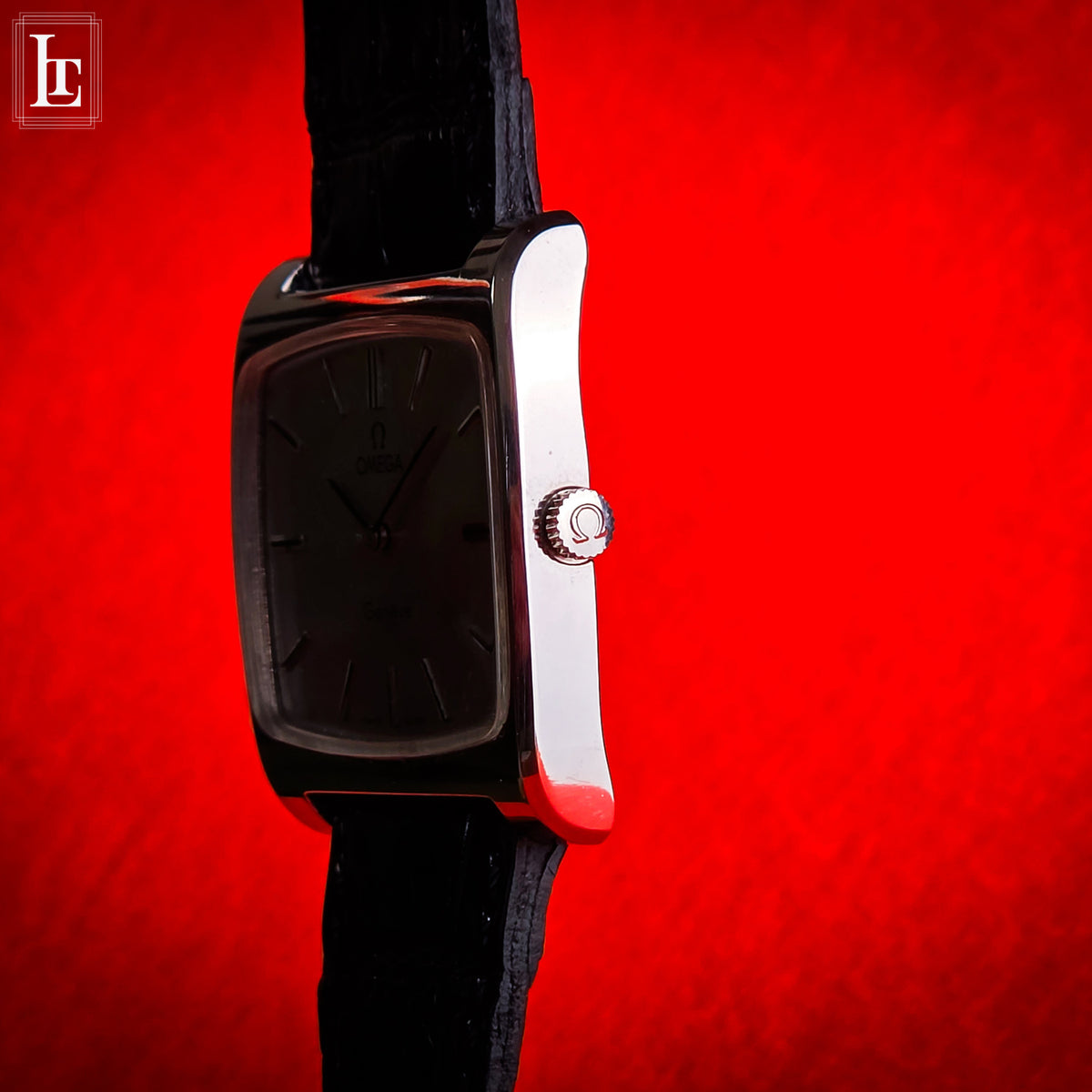
Omega Genève "TV Screen" Ref. 111.0109
Omega Genève "TV Screen" Ref. 111.0109
NOT AVAILABLE
Brand: OmegaTypology: Vintage sport watch
Year: 1973
There was a moment in the 1970s when watchmaking stopped trying to look traditionally elegant and began embracing the language of modern design. The Omega Genève TV Screen belongs precisely to that moment.
The reference 111.0109, produced in 1973, is an especially evocative example of Omega’s experimentation during the decade. Its distinctive tonneau-shaped case, softened rectangular profile and generous proportions reflect the visual vocabulary of the era: architectural lines, unconventional geometry and a fascination with the television screen as a symbol of modernity.
The appeal of this Genève is not simply its unusual shape. It is the way the silver dial interacts with the case, creating a remarkably cohesive design that feels unmistakably early 1970s without becoming excessively flamboyant. This is vintage Omega at its most experimental — still grounded in traditional Swiss watchmaking, but already looking towards a new aesthetic language.
The 1970s were a fascinating period for Omega. Alongside its established round watches, the manufacture introduced increasingly adventurous case designs, embracing the broader cultural shift towards industrial design and modern architecture. The Genève collection became one of the principal platforms for this experimentation, making watches such as the TV Screen particularly interesting for collectors today.
This example is fitted with a black Louisiana alligator strap, which deliberately contrasts with the warm, graphic character of the original design while keeping the overall appearance refined.
Recently serviced, it represents exactly the kind of watch that deserves attention beyond conventional collecting categories: historically coherent, visually distinctive and unmistakably of its time.
For collectors interested in 1970s watch design, the Genève TV Screen is a compelling reminder that vintage watchmaking was not always about preserving tradition. Sometimes, it was about anticipating the future
Legal guarantee of conformity
Download the notice as PDF


Specifics
-
General info
- Reference: 111.0109
- Serial number: 36.xxx.xxx
- Case material: Steel
- Glass: Plexiglass
- Caseback: Snap-back
- Case diameter: 37.0 mm
- Bezel Materials: Steel
- Dial color: Silver
- Dial numerals: No numerals
- General conditions: Great conditions
- Water resistance rate: Not waterproof
- Delivery contents: Watch only
-
Band or Strap
- Band material: Leather
- Lug width: 22 mm
- Buckle type: Classic
- Buckle material: Steel
-
Movement
- Calibre: Omega
- Movement type: Manual wind
- Complications: None
Available now: Omega
-
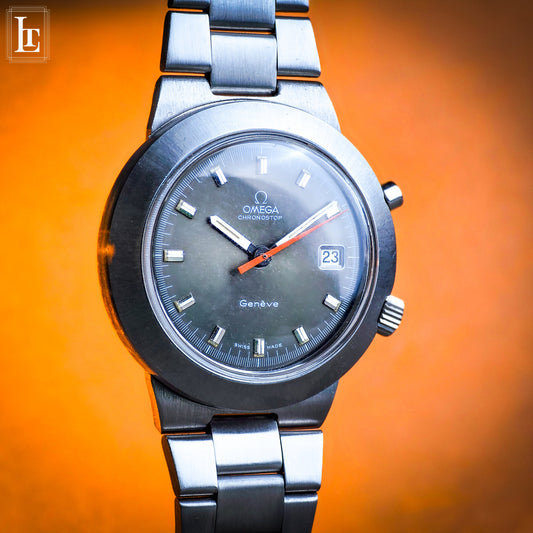
Omega Chronostop 146.012 NOS
Regular price €2.200,00Regular priceUnit price per -
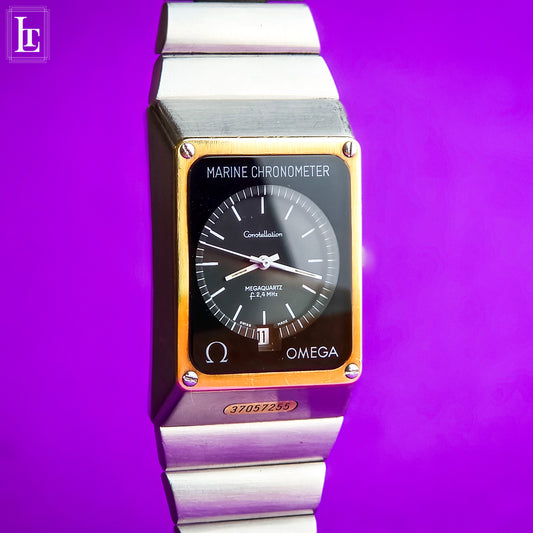
Omega Constellation Marine Chronometer
Regular price €4.200,00Regular priceUnit price per -
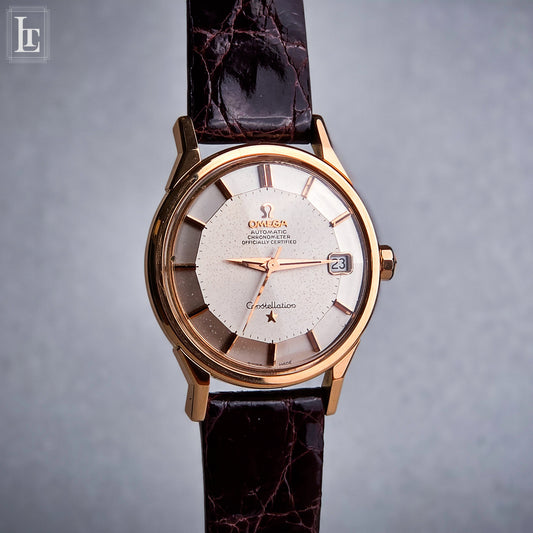
Omega Constellation Piepan 18k rose gold
Regular price €5.200,00Regular priceUnit price per -
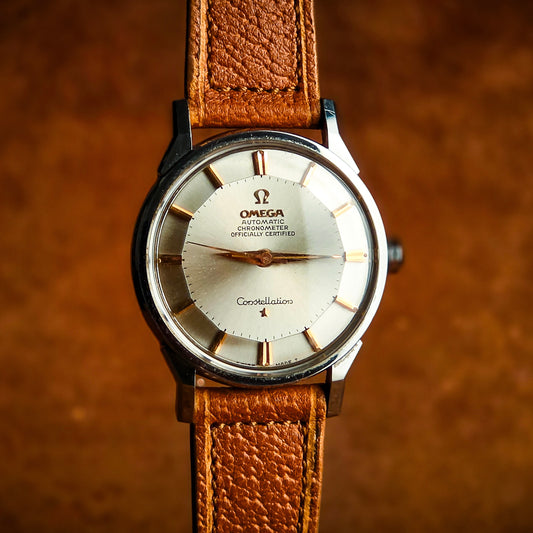
Omega Constellation “Pie-Pan”
Regular price €3.500,00Regular priceUnit price per