

Rolex
Rolex Datejust 16220 White Roman
Rolex Datejust 16220 White Roman
NOT AVAILABLE
Brand: RolexTypology: Modern dresswatch
Year: 1991
Some watches are fashionable. Others define what classic style actually means. The Rolex Datejust Ref. 16220 belongs firmly to the second category: a watch whose proportions, details and unmistakable combination of elements have remained relevant across generations.
This 1991 example captures one of the most enduring Datejust configurations: a crisp white dial with applied Roman numerals, complemented by the unmistakable five-link Jubilee bracelet. It is a combination that works because every element has a precise role. The white dial provides a clean, almost architectural background, while the Roman numerals introduce a more refined, dress-oriented character. The result is elegant without becoming formal, sophisticated without looking deliberately styled.
The Jubilee bracelet is perhaps the defining element. Originally introduced by Rolex for the Datejust, its five-link construction gives the watch an entirely different personality from the more utilitarian Oyster. It catches the light constantly, creating a subtle sense of movement around the wrist, while its compact links allow the watch to sit with remarkable fluidity. It is jewellery-like without ceasing to be a watch — precisely the balance that has made the Datejust such an enduring design icon.
There is also something particularly appealing about this example's age. The tritium dial belongs unmistakably to the pre-Super-LumiNova era, adding an authentic period detail that modern Datejusts cannot replicate. Even the original caseback sticker remains partially visible, an unusually charming reminder of the watch's earlier life.
The Ref. 16220 represents the Datejust at its most recognisable: restrained, versatile and immediately identifiable. A watch that can sit beneath a tailored jacket just as naturally as it can accompany a casual wardrobe — and a configuration that demonstrates why the Datejust has remained one of Rolex's most influential designs for generations.
Legal guarantee of conformity
Download the notice as PDF


Specifics
-
General info
- Reference: 16220
- Serial number: X4xxxxx
- Case material: Steel
- Glass: Sapphire
- Caseback: Screw-back
- Case diameter: 36.0 mm
- Bezel Materials: Steel
- Dial color: White
- Dial numerals: Roman
- General conditions: Great conditions
- Water resistance rate: Not waterproof
- Delivery contents: Watch only
-
Band or Strap
- Band material: Metallic bracelet
- Lug width: 20 mm
- Buckle type: Deployant
- Buckle material: Steel
-
Movement
- Calibre: Rolex 3135
- Movement type: Automatic
- Complications: Date
Available now: Rolex
-
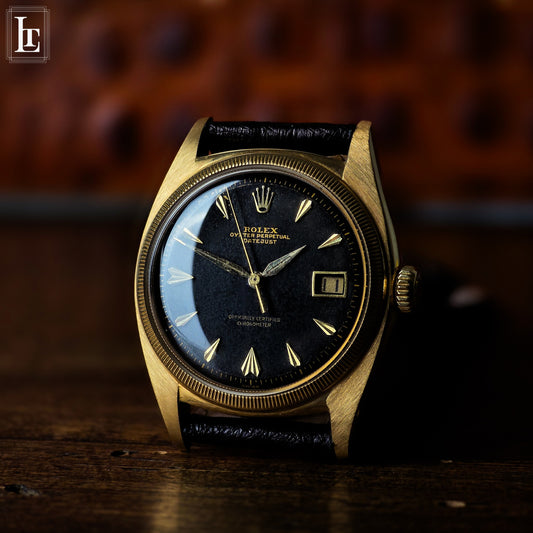
Rolex 6105 “Ovettone” gilt yg
Regular price €22.000,00Regular priceUnit price per -
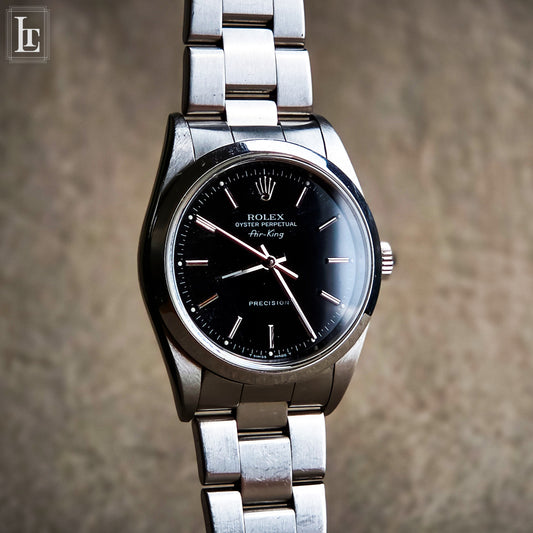
Rolex Air King 14000M Warranty Black
Regular price €4.900,00Regular priceUnit price per -
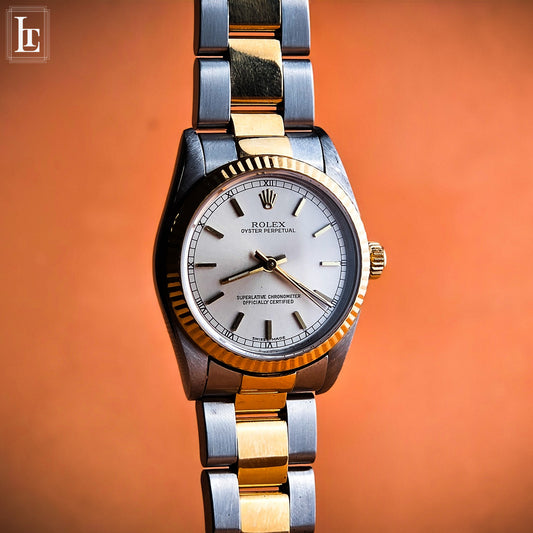
Rolex Date Boy 31 mm
Regular price €4.000,00Regular priceUnit price per -
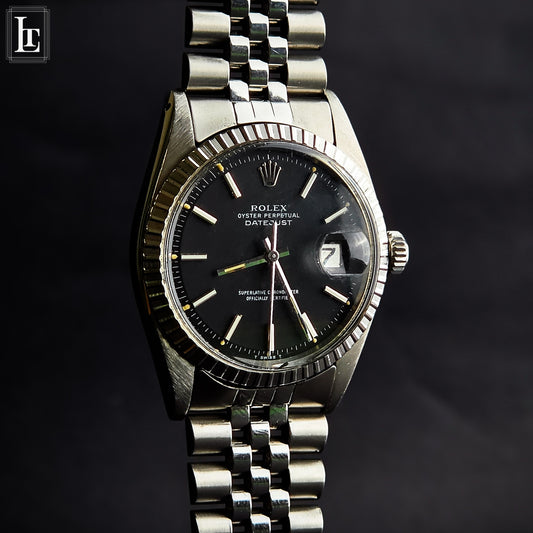
Rolex Datejust 1603 black Full Set
Regular price €6.200,00Regular priceUnit price per