

Heuer
Heuer Carrera Chronograph Ref. 1153 S automatic
Heuer Carrera Chronograph Ref. 1153 S automatic
NOT AVAILABLE
Brand: HeuerTypology: Vintage chronograph
Year: 1972
Heuer’s rise in motorsport wasn’t accidental—it was engineered. By the late 1960s and early ’70s, Heuer had embedded itself so deeply into racing culture that its chronographs became part of the sport’s visual identity. Timing partnerships with Formula 1 teams, dashboards fitted in rally cars, and ambassadors like Jo Siffert pushed the brand into the cockpit—literally. When the automatic chronograph race began in 1969, Heuer answered with the Calibre 11/12 line, pairing bold design with groundbreaking mechanics. The Carrera remained the purest expression of that era: clean, readable, built for speed.
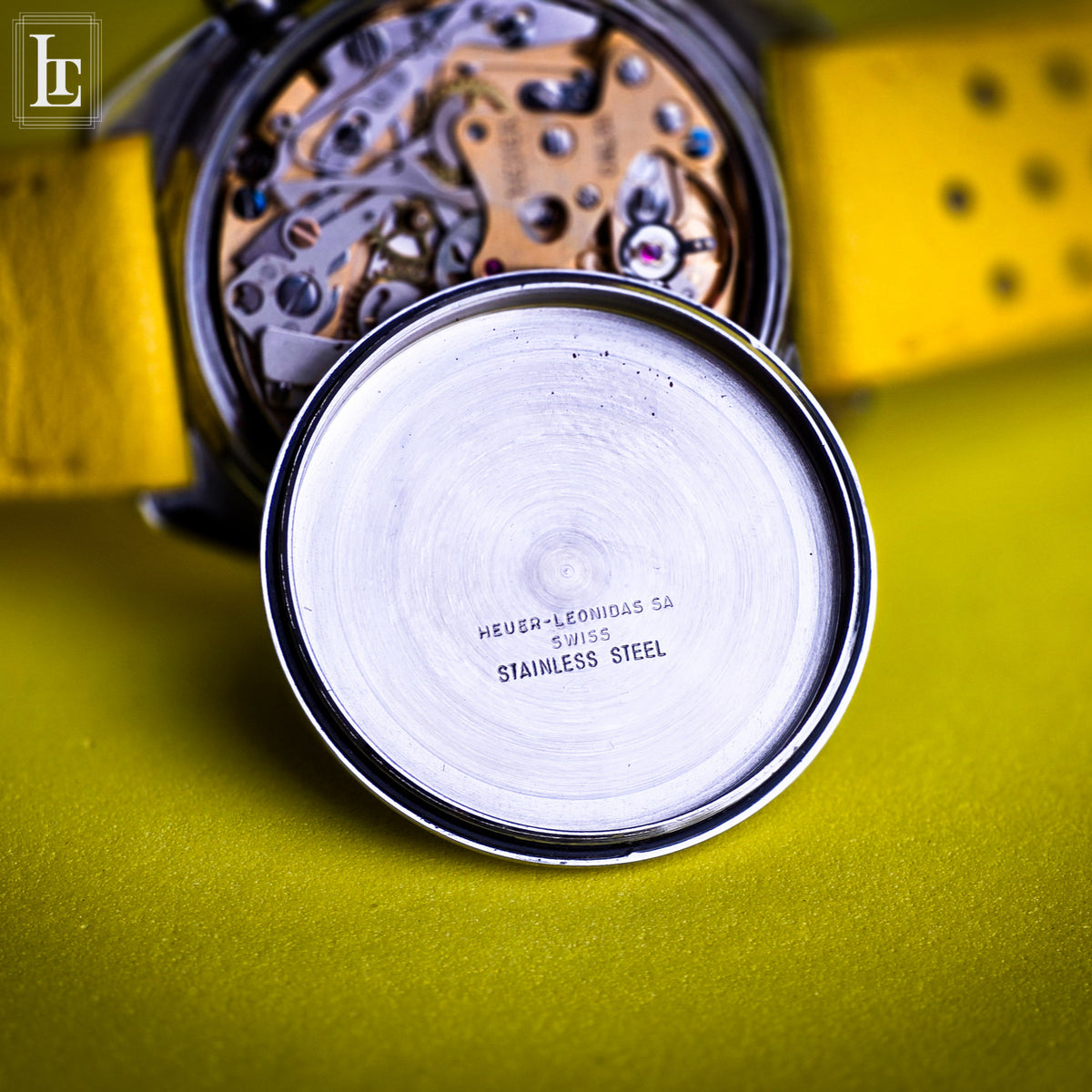
This Heuer Carrera Ref. 1153 S from 1972 is one of the most charismatic examples from the early automatic era. The panda dial—silver base with black registers—gives the watch a high-contrast, aggressive racing aesthetic. The left-side crown, characteristic of Calibre 12 models, signals the modular architecture of this important movement: a micro-rotor automatic paired with the famous Dubois-Dépraz chronograph module. It’s a watch that feels fast even standing still.
The yellow Corfam-style strap injects a vintage motorsport attitude, echoing the synthetic racing straps worn by drivers in the 1970s. The tonneau case keeps its period-correct presence: wide, purposeful, unmistakably Heuer. This 1153 S is exactly what a collector should look for—historically relevant, visually striking, and mechanically tied to one of the most important turning points in chronograph history.
Legal guarantee of conformity
Download the notice as PDF


Specifics
-
General info
- Reference: 1153 S
- Serial number: 28xxxx
- Case material: Steel
- Glass: Mineral
- Caseback: Screw-back
- Case diameter: 39.0 mm
- Bezel Materials: Steel
- Dial color: Silver
- Dial numerals: No numerals
- General conditions: Great conditions
- Water resistance rate: Not waterproof
- Delivery contents: Watch only
-
Band or Strap
- Band material: Leather
- Lug width: 20 mm
- Buckle type: Classic
- Buckle material: Steel
-
Movement
- Calibre: Cal.12
- Movement type: Automatic
- Complications: Chronograph
Available now
-
Rolex Submariner 126610LV Starbucks 09/26
Regular price €15.800,00Regular priceUnit price per -
Breitling Navitimer Cosmonaute Ref. 809 panda 24h
Regular price €6.500,00Regular priceUnit price per -
Rolex Daytona 16520 White Inverted 6 Full Set
Regular price €29.000,00Regular priceUnit price per -
Omega De Ville Tank
Regular price €2.000,00Regular priceUnit price per