

Cartier
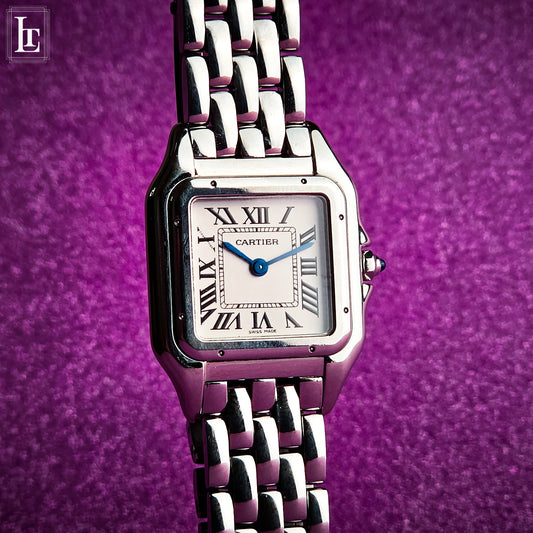
Cartier Panthère Ruban Full Set
Cartier Panthère Ruban Full Set
NOT AVAILABLE
Brand: CartierTypology: Modern dresswatch
Year: 2006
The Panthère Ruban represents one of the most elegant interpretations of the aesthetic language that has defined Cartier for more than a century. Introduced in the early 2000s, the Ruban collection was conceived as a softer and more fluid evolution of the iconic Panthère design. Its name — “Ruban,” meaning ribbon — perfectly captures the spirit of the watch: a seamless, sculptural form where the case and the integrated band flow together like a satin ribbon wrapped around the wrist.
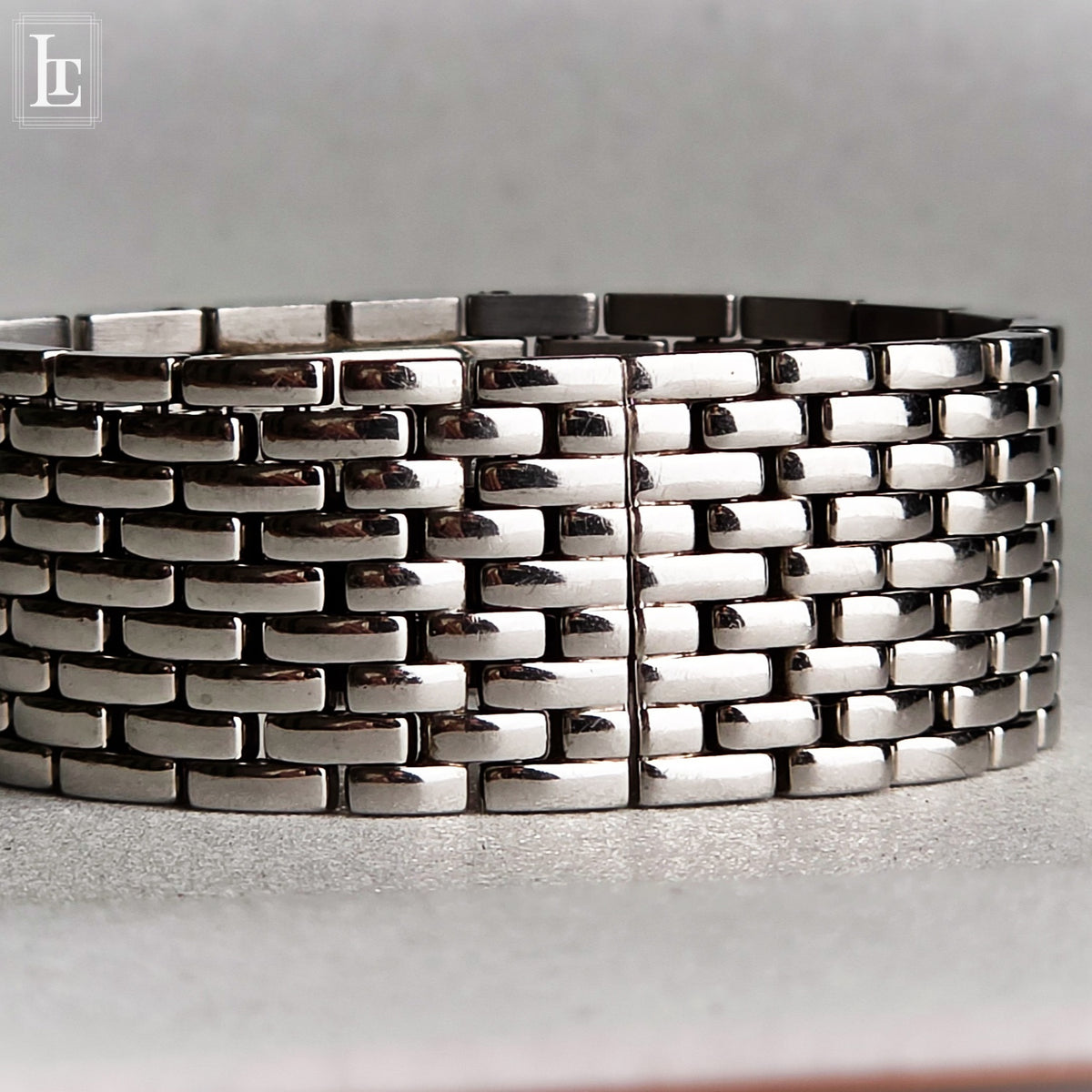
The silhouette is instantly recognizable. Instead of sharp angles or overtly technical lines, the Ruban embraces a rounded, almost organic architecture. The case melts gently into the integrated steel band, creating a continuous curve that emphasizes comfort and elegance. It is a design philosophy deeply rooted in Cartier’s historic approach to watchmaking, where the boundary between jewelry and timepiece disappears.
This example is particularly refined thanks to its Mother-of-Pearl dial, a material long associated with high jewelry and fine watchmaking. Each dial is unique: the nacre surface captures light with subtle iridescent reflections that shift between soft ivory, silver, and delicate pastel tones depending on the angle. The result is a dial that feels alive, constantly changing and never identical from one moment to the next.
Paired with the polished steel case and the iconic blue cabochon crown, the watch embodies the quiet luxury for which Cartier is celebrated. It is not a piece that seeks attention through excess, but through proportion, balance, and timeless design.
Today the Ruban remains a fascinating chapter in Cartier’s design history: a watch that perfectly illustrates how the maison continues to reinterpret its own codes while preserving the unmistakable elegance that has defined it for generations.
Legal guarantee of conformity
Download the notice as PDF


Specifics
-
General info
- Reference: W61001T9
- Serial number: 91xxxPB
- Case material: Steel
- Glass: Sapphire
- Caseback: Fixed with screws
- Case diameter: 24.0 mm
- Bezel Materials: Steel
- Dial color: White
- Dial numerals: Roman
- General conditions: Great conditions
- Water resistance rate: Not waterproof
- Delivery contents: Full set b&p
-
Band or Strap
- Band material: Metallic bracelet
- Lug width: 24 mm
- Buckle type: Deployant
- Buckle material: Steel
-
Movement
- Calibre: Cartier
- Movement type: Quartz
- Complications: None
Available now: Cartier
-
Cartier Panthère Quartz
Regular price €5.000,00Regular priceUnit price per -
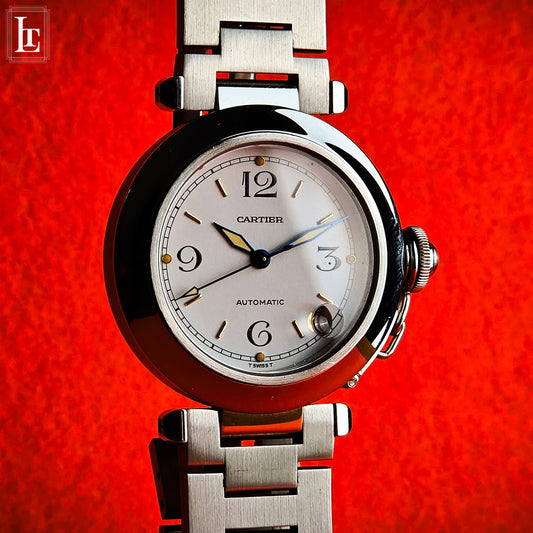
Cartier Pasha C Ref. 2324 Full Set
Regular price €3.000,00Regular priceUnit price per -
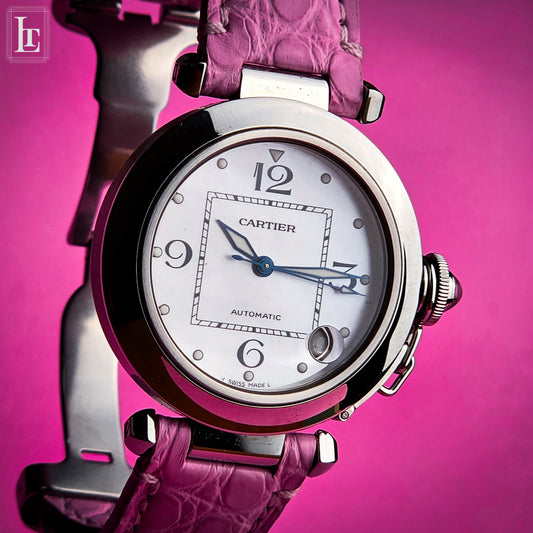
Cartier Pasha C Ref. 2324 Pink MoP
Regular price €3.200,00Regular priceUnit price per -
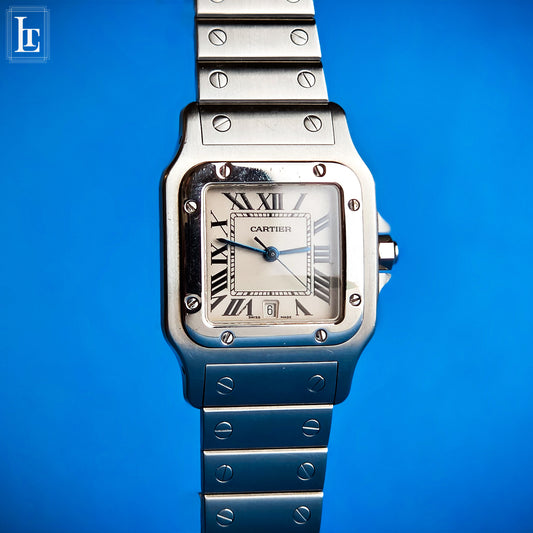
Cartier Santos Galbée Ref. 1564 Silver
Regular price €5.000,00Regular priceUnit price per